.png)
What Is the Spa Demolition Removal Process?
That old hot tub can take up far more than patio space. A cracked shell, failing pump, torn cover, or unused in-ground spa can make a backyard feel unfinished and become one more job that never gets done. The spa demolition removal process gives homeowners a safe, practical way to clear it out without trying to wrestle a heavy, awkward structure onto a trailer.
For most people, spa removal is not a simple curbside pickup. Hot tubs are bulky, often hard to access, and built from a mix of materials that need different disposal methods. The right removal crew handles the labor, breaks down the unit when needed, hauls away the debris, and leaves the area ready for whatever comes next.
Why Spa Removal Takes More Than Muscle
A standard portable spa may weigh 500 to 1,000 pounds empty. Larger models, built-in units, and older spas with waterlogged insulation can weigh considerably more. Moving one in a single piece can damage gates, pavers, landscaping, fences, and the spa itself before it ever reaches the truck.
Access changes the plan, too. A spa sitting beside a driveway is very different from one tucked into a small backyard behind stairs, around a side yard corner, or built into a deck. In some cases, the safest and most efficient approach is to dismantle the spa where it sits and carry out manageable sections.
There is also the disposal side. A hot tub can contain plastic or acrylic shell material, a wood or synthetic cabinet, foam insulation, metal framing, pumps, wiring, plumbing, and an old cover. Throwing everything into one pile is rarely the best answer. Responsible hauling means sorting materials when practical and taking reusable or recyclable components to the appropriate facilities.
The Spa Demolition Removal Process, Step by Step
Every property has its own layout, but a professional hot tub removal job generally follows a clear sequence. Knowing what happens ahead of time makes scheduling easier and helps avoid surprises on removal day.
1. Get a clear quote and assess access
The process starts with identifying the spa's size, condition, location, and path to the truck. Photos can help with an initial estimate, especially when they show the entire spa, gates, stairs, narrow walkways, and any deck enclosure.
A fair quote should account for labor, demolition needs, loading, hauling, and disposal. The price may change if the spa is concealed inside a structure, attached to decking, filled with debris, or located where special equipment or additional labor is needed. Honest pricing starts with a clear picture of the job, not a vague promise that changes once the crew arrives.
2. Drain the spa and disconnect utilities
The spa should be completely drained before removal. If it still holds water, it needs time to empty properly so water does not flood a patio, slope toward a home, or create a muddy work area.
Power must also be safely disconnected. Many hot tubs are hardwired to a dedicated electrical circuit, rather than plugged into a standard outlet. A qualified electrician should handle any electrical disconnection when required. The removal crew can then work on a spa that is no longer connected to power or water.
Gas-heated spa equipment needs extra care as well. If gas lines are involved, arrange for a licensed professional to cap or disconnect them before demolition begins. This is one step where saving a little time is not worth creating a safety problem.
3. Protect the work area and plan the breakdown
Before cutting or lifting begins, the crew checks the route out. This may include moving patio furniture, protecting nearby surfaces, opening gates, and confirming where the truck can park. A good crew does not drag broken spa pieces across your lawn or scrape them along finished concrete when there is a safer route.
If the spa can be removed in one piece, that may be the fastest option. It depends on weight, access, and whether there is enough room to maneuver it. When a whole-unit removal is not realistic, demolition is usually the better choice.
4. Dismantle the spa into manageable sections
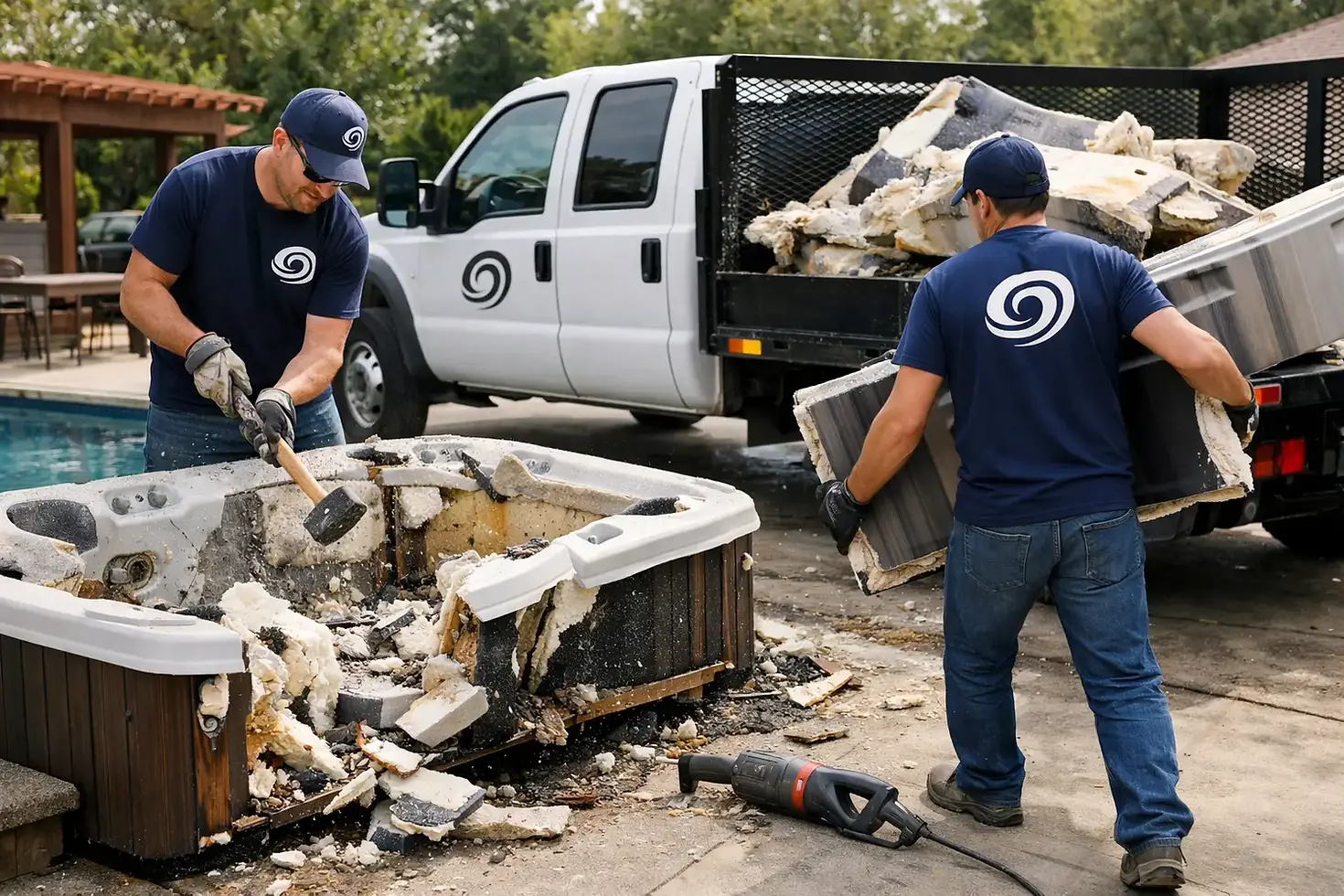
For most tight-access jobs, the cabinet panels and equipment are removed first. Pumps, heaters, control boxes, plumbing, and metal components can often be separated from the shell. The outer shell is then cut into smaller sections using the appropriate tools.
This part of the job can be noisy and dusty, especially with older fiberglass or acrylic units. Crews should use proper safety gear and keep the work area controlled. The goal is not to make a mess quickly. It is to reduce a large, difficult item into pieces that can be safely carried out without damaging the property.
A built-in spa may require more detailed demolition. If it is surrounded by tile, stone, masonry, or decking, the owner needs to decide what stays and what goes. Removing only the spa insert is different from demolishing the entire raised surround or deck structure. Be clear about that scope before work begins.
5. Load, haul, and sort the debris
Once dismantled, the spa materials are loaded for removal. This includes the shell pieces, cabinet, equipment, cover, steps, plumbing, and any loose debris associated with the old unit.
At this stage, recyclable materials such as metal may be separated from general disposal debris when possible. Some usable accessories may also have a second life, though damaged pumps, cracked shells, and worn covers are usually disposal items. The practical goal is to keep as much material as possible out of the landfill without slowing down a job that needs to be completed efficiently.
6. Sweep the area and leave room for your next project
The final step is basic site cleanup. After hauling away the spa, the crew removes loose debris and leaves the area clear. It will not turn an old spa pad into a finished patio, but it should give you a clean starting point for landscaping, new furniture, a fire pit, a pergola, or a replacement hot tub.
What You Can Do Before Removal Day
A little preparation keeps the appointment moving. Drain the water in advance, make sure utilities are safely disconnected, and remove personal items from the spa and surrounding area. If there is a locked gate, pets in the yard, or a vehicle blocking the access route, take care of those details before the crew arrives.
It also helps to decide whether you want related items removed at the same time. Old spa covers, broken patio furniture, damaged outdoor rugs, planters, and unused yard equipment can often be hauled during the same visit. Combining items may save you from arranging a second pickup later.
Do not feel obligated to remove panels, cut the shell, or attempt to tip the spa yourself. DIY demolition can expose sharp edges, hidden wiring, moldy insulation, and heavy components that shift unexpectedly. If you have already started taking it apart, simply let the removal team know what has been done so they can plan accordingly.
When Full Demolition Is the Better Choice
Keeping an old spa intact makes sense only when it has a clear route out and can be moved safely. Demolition is usually the smarter choice when access is narrow, the unit is badly damaged, the spa is built into a yard feature, or moving it whole would risk property damage.
The trade-off is that cutting up a spa can take more labor than a straightforward lift-and-load job. However, that labor is often less expensive than repairing a broken gate, damaged deck, or cracked hardscape caused by forcing a massive unit through a space it cannot fit.
For homeowners in San Diego County and Riverside County, Jaguar Junk Removal can handle the heavy lifting, spa demolition, hauling, and responsible disposal so you can get your backyard back. A quick quote based on the spa and access conditions is the best way to know what your job requires.
An unused spa should not keep claiming space in a yard you want to enjoy. Once it is gone, that same corner can become a cleaner, safer place for the plans you have been putting off.


Comments