.png)
11 Best Garage Junk Removal Tips That Work
That garage corner full of old paint cans, broken chairs, moving boxes, and a refrigerator that stopped working three years ago does not get easier to deal with on its own. The best garage junk removal tips are the ones that help you make decisions quickly, stay safe around heavy items, and get the space back without turning your weekend into a hauling project.
A garage cleanout can be simple when you stop treating every item like it needs a long debate. Start with a clear plan, keep what truly serves a purpose, and make a realistic choice about what you can donate, recycle, dispose of, or have hauled away.
Best Garage Junk Removal Tips for a Faster Cleanout
1. Set a clear goal before opening a single box
“Clean the garage” is a big job. “Make room for one car,” “clear a workbench,” or “empty the garage before a move” is much easier to act on. Your goal determines how strict you need to be with decisions.
If you are preparing a home for sale, for example, the goal is usually open, usable space. If you are making room for a home gym or workshop, you may need to keep tools and seasonal equipment but remove bulky furniture, unused appliances, and overflow storage. A clear finish line prevents the cleanout from becoming another pile-shifting exercise.
2. Start with the obvious junk
Do not begin with sentimental boxes or the bin of mystery cords. Start with items that are clearly broken, damaged, outdated, or no longer useful. Old mattresses, cracked plastic storage bins, worn-out patio furniture, empty packaging, broken shelving, and unusable appliances are easy first decisions.
This creates visible progress fast, which matters when the job feels overwhelming. It also gives you room to sort the items that actually require thought. If an item has been buried behind clutter for years and nobody has looked for it, that is usually useful information.
3. Create four simple categories
Keep your sorting system practical: keep, donate, recycle, and remove. You do not need a perfect organization system before you start. You need a way to prevent items from going back into the garage simply because you have not decided what to do with them.
Use painter's tape, cardboard signs, or clearly labeled bins. Keep the donation pile clean and dry. Put recycling in a separate area only if you know it will be accepted. Everything else that is damaged, bulky, unwanted, or hard to transport belongs in the removal pile.
4. Be honest about “maybe someday” items
Garages often become holding areas for projects that never happened. Leftover tile from a remodel, old exercise equipment, spare cabinets, car parts, broken lawn tools, and furniture waiting to be refinished can take up a surprising amount of room.
Ask yourself two questions: Would I buy this again today? Have I used it in the past year? There are exceptions, especially for emergency supplies, seasonal gear, and specialty tools. But if the answer is no to both questions, it is likely taking up space that could be put to better use.
5. Do not make donation a reason to delay
Donation is a good option for clean, working items that someone else can use. Usable furniture, small appliances, household goods, tools, and unopened supplies may deserve a second home. Still, donation only helps if the items are in decent condition and you have a realistic plan to get them there.
A torn couch, broken dresser, stained mattress, or appliance that does not work is not a donation item. Setting aside unusable items for a charity can leave them sitting in the garage for another six months. Responsible disposal is often the more honest choice.
6. Plan around bulky items early
Large items control the job. A refrigerator, water heater, sofa, mattress, treadmill, spa equipment, heavy workbench, or old cabinets can block access to everything behind them. Identify these pieces before you start sorting smaller items.
Moving bulky junk without the right equipment can lead to damaged walls, strained backs, and a trip you did not need to make. It also depends on the item. Some appliances may contain materials that require special handling, while old paint, chemicals, batteries, and propane tanks should not be mixed into regular household junk.
7. Keep hazardous materials separate
Not every garage item belongs in a junk pile. Paint, motor oil, pesticides, pool chemicals, solvents, automotive fluids, batteries, fluorescent bulbs, and propane cylinders may need to go through a designated household hazardous waste program.
Do not pour liquids down drains or put leaking containers in a vehicle. Keep lids secure, store items upright, and set them aside where children and pets cannot reach them. If you are not sure what something is, do not guess. Read the label and check local disposal requirements before moving it.
8. Make a pickup path before hauling day
A cleanout goes much faster when the crew can safely reach the items. Clear a path from the garage to the driveway, remove vehicles if possible, and keep pets inside during the pickup. If there are items you are keeping, move them to one clearly marked area so they are not removed by mistake.
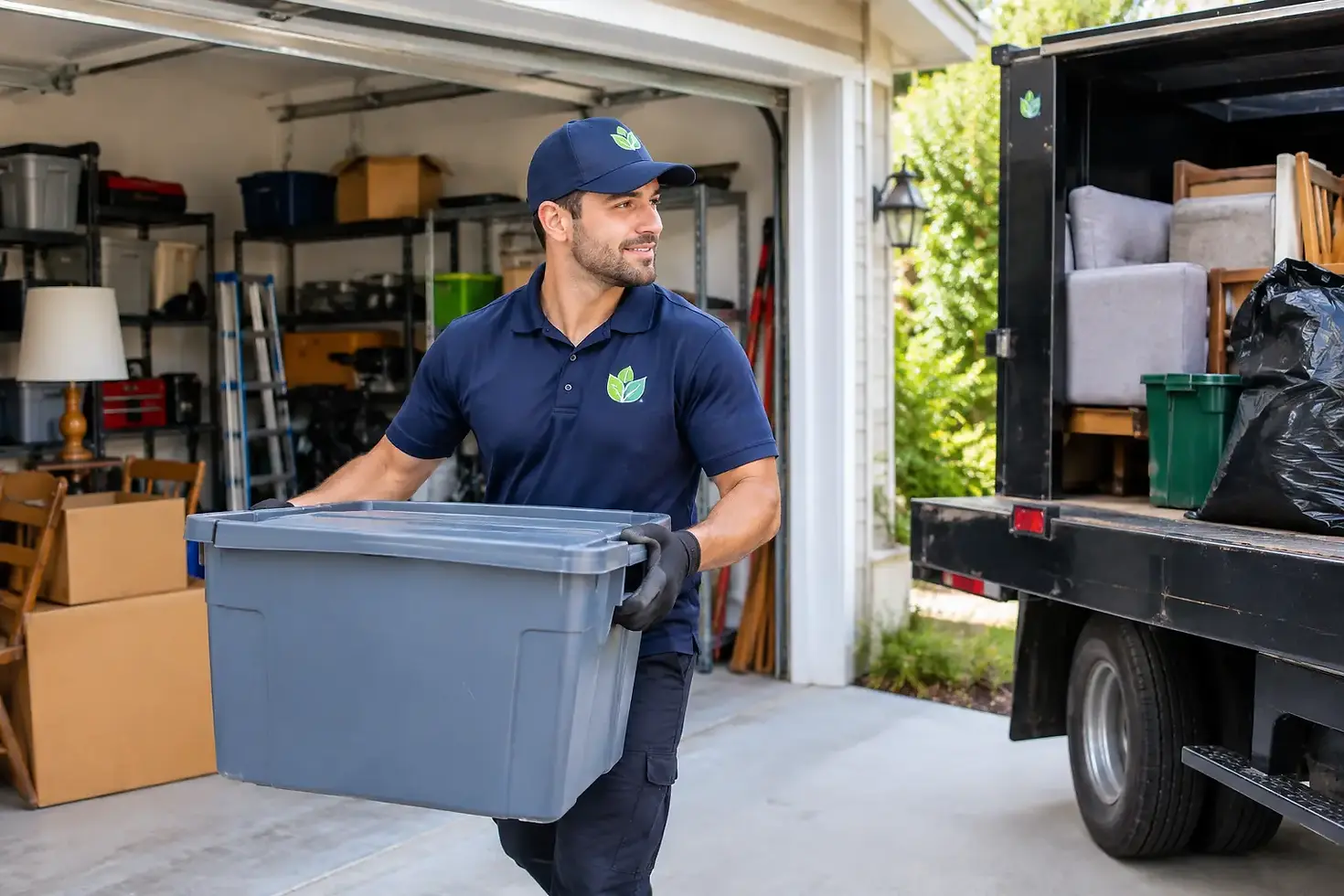
You do not need to drag every heavy item to the curb. In fact, doing so can create safety issues and block your driveway. A full-service junk removal team can handle the lifting, loading, hauling, and sorting, while you simply point out what needs to go.
Save Time by Knowing When to Call for Help
DIY removal makes sense for a few bags, a small box of recyclables, or one lightweight item that fits in your vehicle. It becomes less practical when you are dealing with a full garage, multiple trips, heavy furniture, appliances, construction debris, or a tight deadline.
Consider the real cost of doing it yourself: truck rental, fuel, dump fees, lifting help, time off work, and the stress of figuring out where each item belongs. For property managers, homeowners preparing to move, and families handling an estate or renovation cleanout, one scheduled pickup is often the simpler option.
Jaguar Junk Removal helps homeowners and businesses across San Diego and Riverside counties clear garages without the back-and-forth of renting a truck or making disposal runs. The crew can remove the heavy items, sort reusable materials when possible, and leave you with usable space instead of another weekend project.
What to Do After the Garage Is Empty
Do not rush to fill the open space with new storage bins. First, sweep the floor, look for moisture or pest issues, and take a minute to see how you want the garage to function. Parking, storage, hobbies, tools, and laundry areas all need different layouts.
Put frequently used items at eye level and near the garage door. Store seasonal items higher up or farther back. Keep chemicals locked away, and avoid storing anything directly on the floor if moisture is a concern. A few shelves or wall hooks can be useful, but only after you have reduced the clutter.
The real win is not a perfectly staged garage. It is having room to park, find what you need, and stop feeling stressed every time you open the door. Start with the obvious junk, make quick decisions on the rest, and get help with the heavy lifting when the job is bigger than your time or equipment allows.


Comments